Letter No. 03
I Thought It Was Just One Painting
October 2026
Listened to while writing:
I Thought It Was Just One Painting.
I think one of the strangest things about making art is that you spend all this time alone with an idea, and then one day you put it on a wall and suddenly everybody has an opinion.
Thankfully, in this case, they were very nice opinions. 😂
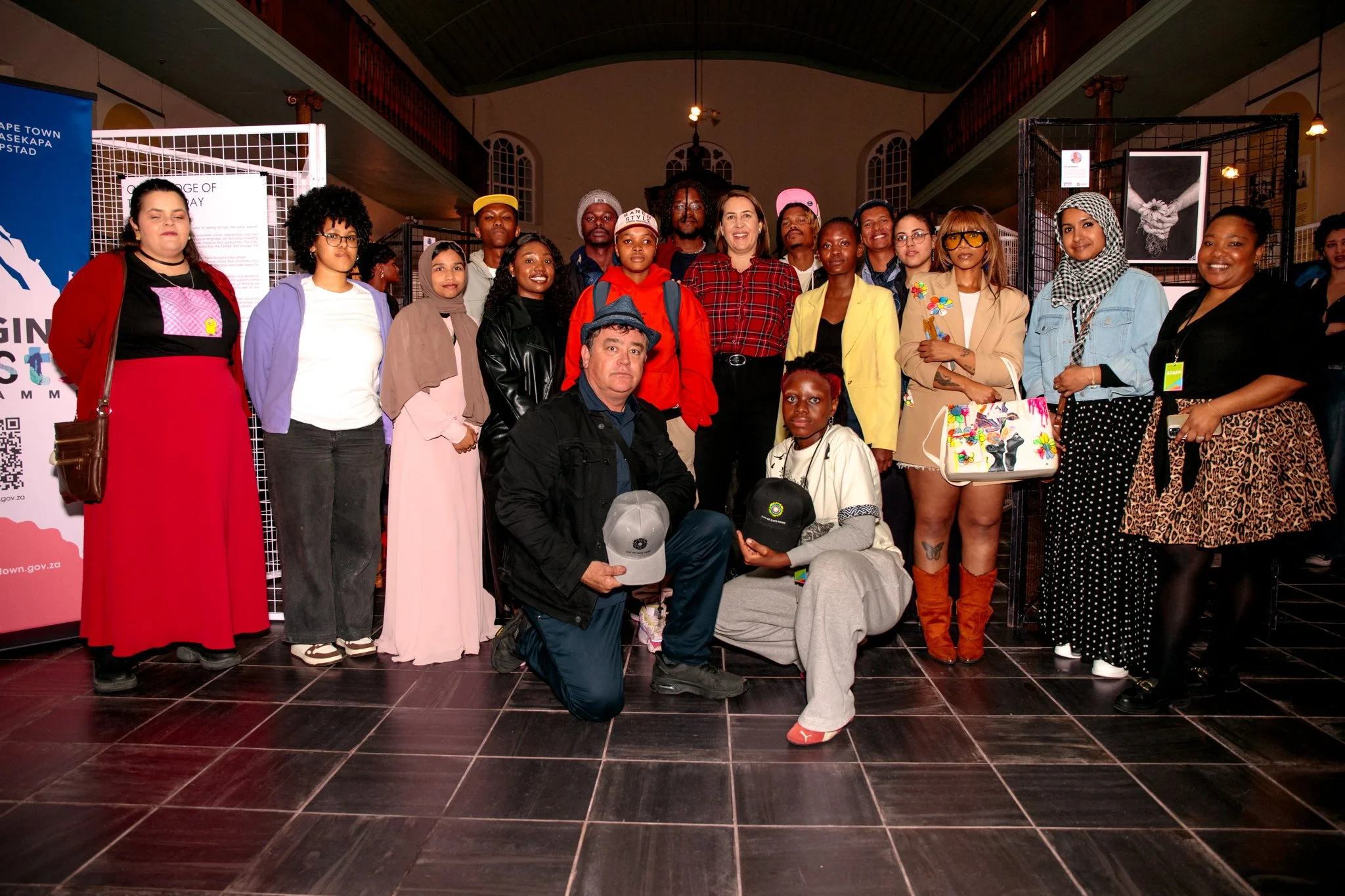
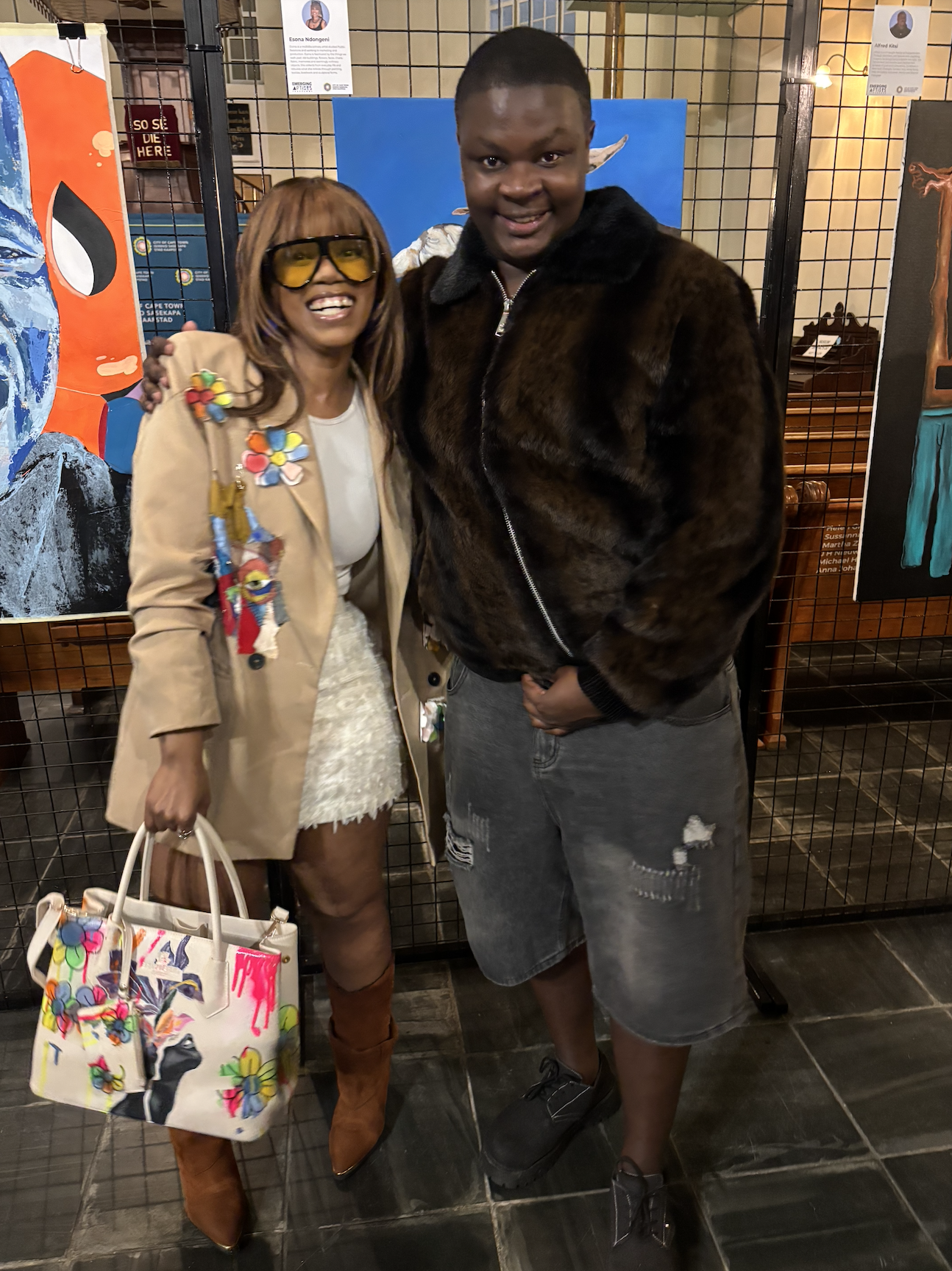
I recently had the opportunity to exhibit Love Language as part of the City of Cape Town Emerging Artists Programme Pop-Up Exhibition, alongside 17 other incredible Cape Town artists at the SA Sendinggestig Museum on Long Street.
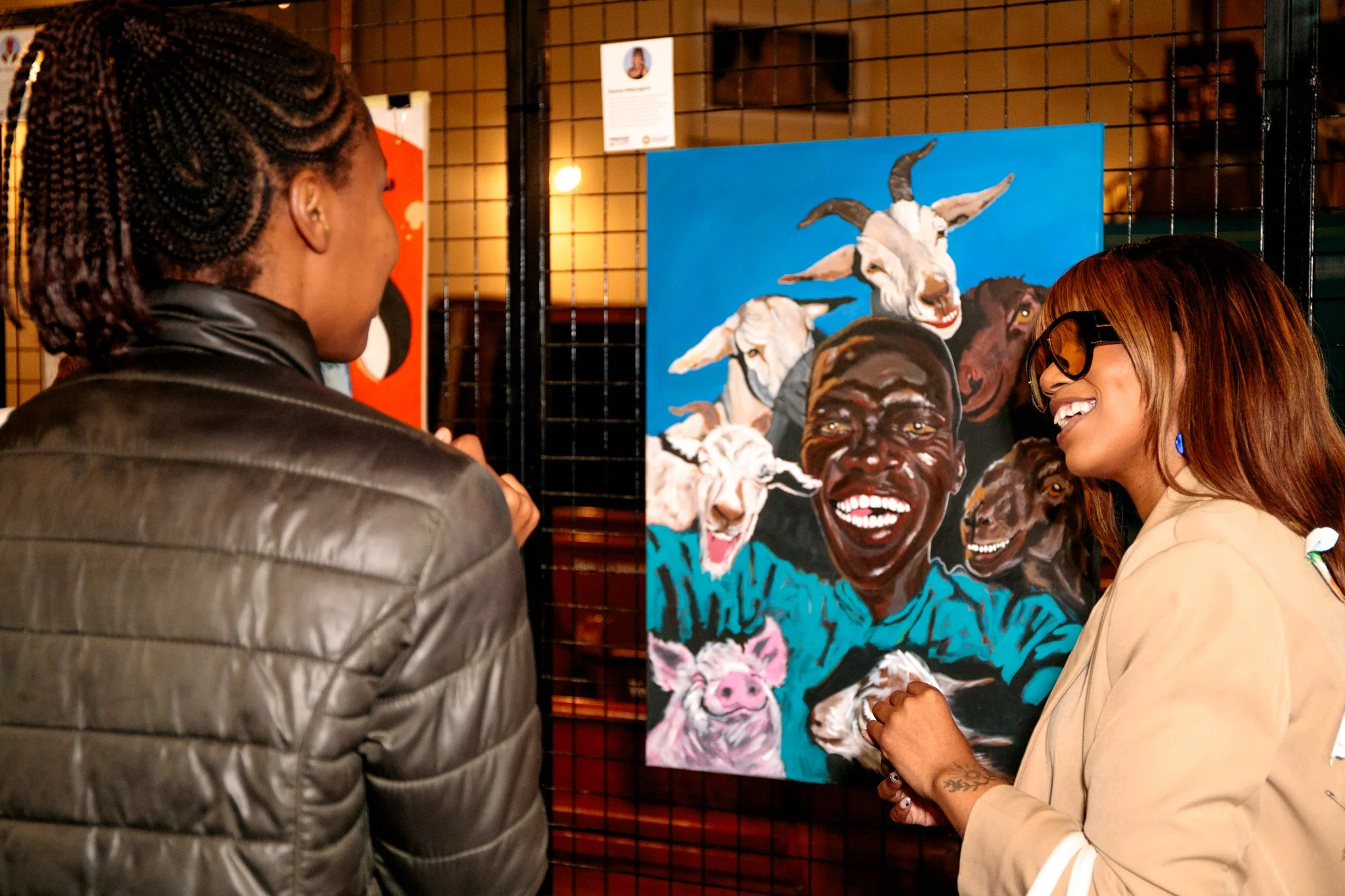
And I'm still processing just how much love this painting received. People stopped. People stared. People smiled.
Some came with stories. Others with smiles and questions. And then they started telling me what they thought it meant. That was probably my favourite part. One person saw childhood. Someone else saw home. Someone saw family. Others immediately understood the relationship between the herder and the animals. People would stand in front of the exact same painting and somehow walk away with completely different stories. I loved that.
Because Love Language began with something very familiar to me.
I come from Idutywa in the Eastern Cape, and there are certain images of home that don't really need explaining when you've grown up around them. Animals aren't simply standing around looking picturesque. They are part of life. Part of the household. Part of responsibility. And, for many families, part of our wealth.
A love nobody really talks about.
There is this relationship between a herder and their animals that I've always found beautiful. Because a herder knows their animals. Sometimes they name them. They know their personalities. They know how many left home that morning. And if one doesn't come back, they know exactly which one is missing and they go looking for it. There's a level of love and care in that relationship that I don't think we always stop to think about.
Back home, the herder and the herd leave together every day. They disappear into the landscape for hours while the animals graze, eat and drink, and as the day comes to an end, they make their way home again. I've always wondered what happens during all those hours. Every day. The same person. The same animals. Out there together. What do you guys do all day?
Do they somehow communicate? Do the animals understand more than we think they do? I've always been fascinated by the idea that animals might have their own language with us that we simply don't understand. We see little glimpses of it all the time. A dog somehow knows when you're sad and comes to sit beside you. A cat curls up next to you when something feels off.
No one has said anything. But somehow, they know. Maybe the relationship between a herder and their herd isn't that different.
The animals know the person who leads them out every morning. They know the person who watches over them. They know the person who brings them home. And the herder knows them right back. There is another side to that relationship too.
In our culture, the herder is often also the one ohlabayo, the person who slaughters the animal when the family needs to. I've always found that interesting. To care for something, protect it, know it individually, go searching when it's missing and also understand the role it plays in sustaining the family. It's a complicated kind of love. And somehow, the herder himself can occupy this funny space within the family too. Sometimes he's technically a stranger. But he doesn't really feel like one. He eats with you. Shares meals with the family. Drinks with your uncles. Makes jokes with everyone. Knows the stories. Knows the animals. Knows who's who.
Eventually he's just... there.
Part of the rhythm of the home.
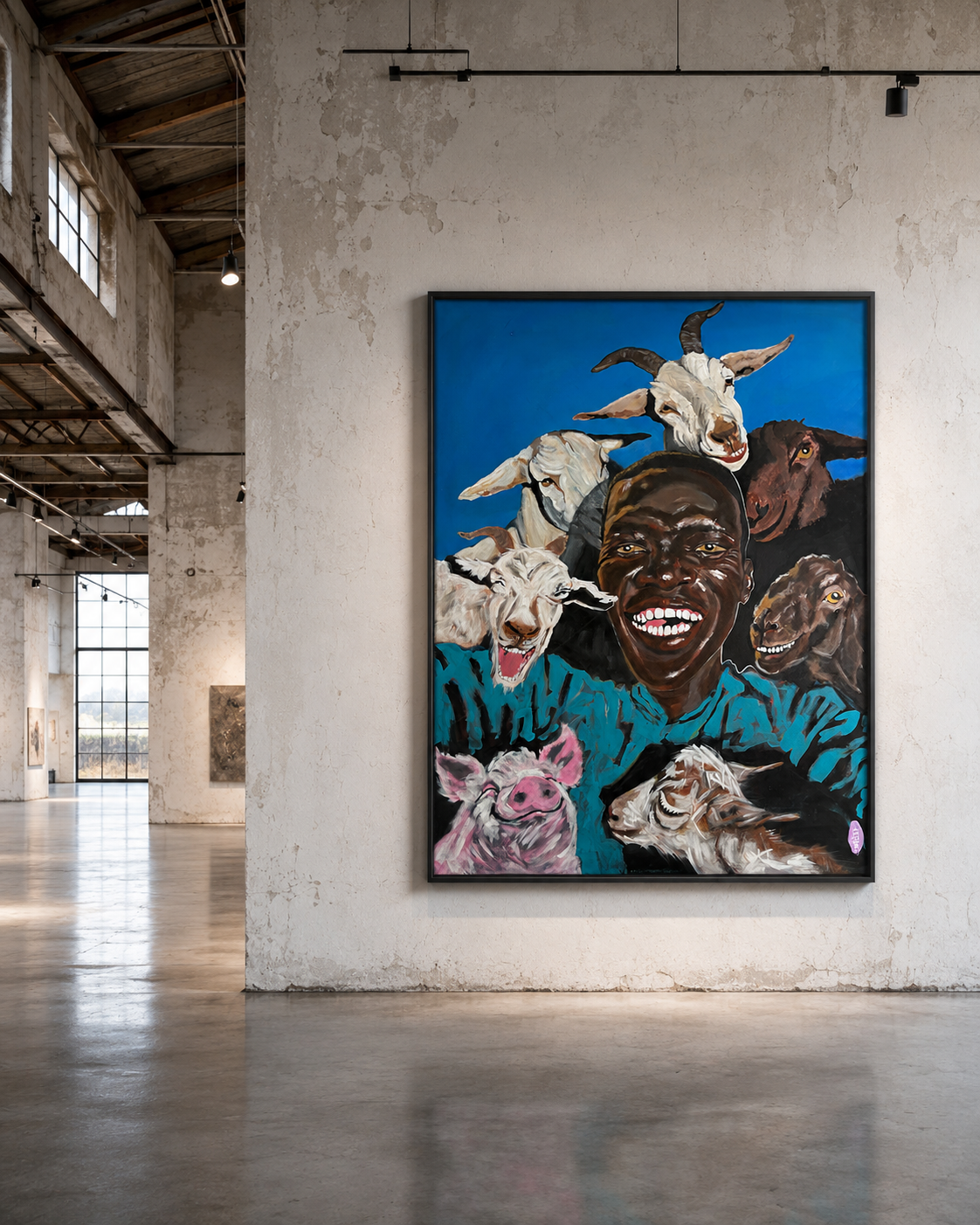
And maybe that's why, when I painted Love Language, I didn't want to paint the herder simply standing beside his animals. I painted them taking a selfie. Because in my head, after spending hours and hours together every single day, surely they have inside jokes by now. 😂 Surely there are friendships happening out there that we'll never know about.
Maybe the animals have a favourite human.
Maybe one is always causing trouble.
Maybe the herder talks to them even though they can't answer in words.
Who knows what happens out there all day?
But I like imagining that somewhere between leaving home in the morning and returning at dusk, a relationship forms. One built through routine. Through responsibility. Through knowing. Through showing up for each other every day. No grand declaration. No I love you.
Just:
I know you.
I notice when you're missing.
I'll come looking for you.
And at the end of the day, I'll bring you home.
That, to me, is a love language.
Then something else kept happening.
People who had seen the painting before meeting me would eventually find out that I had painted it and say:
“YOU painted that?” Apparently, somewhere along the way, Love Language had acquired an imaginary male artist. 😭More than a few people told me they had assumed a man painted it. At first, I just found it funny. But the more it happened, the more fascinating it became. There seemed to be something unexpected about a woman painting this particular memory, herders, livestock, rural life, cultural wealth and painting it this loudly.
And I kind of love that.
Because these memories belong to us too.
I think that's part of the world I'm trying to build with my work.
Taking things that can feel completely ordinary when you've grown up around them and making you look at them again.
But the smiles got me.
Before anyone even told me what they thought the painting meant, I kept noticing people smiling at it.
And so many people used the same word:
Joy.
They told me I had captured joy.
And that probably meant more to me than they realised, because that was exactly the feeling I wanted Love Language to carry.
Yes, there is responsibility in the relationship between the herder and the herd. There is livelihood. There is cultural wealth. There is home. But there is also joy. The kind that doesn't necessarily announce itself as anything extraordinary because, when you're living it, it's simply life. There is humour in the painting. Familiarity. Pride. A little bit of chaos because obviously there is. Look at them. 😂 And underneath all of that, there is affection.
People found their Eastern Cape in it.
Their village.
Their grandparents.
Their animals.
Their childhood.
Their version of home.
Others immediately recognised the cultural wealth in the painting that the animals weren't just animals. They understood what the herd represented to a family and the relationship between the person, the animals and the land.
But what I loved most was that before all the explaining, people smiled.
Maybe that's what joy does. You recognise it before you need to understand it.
And suddenly, something I had made from a memory familiar to me wasn't only mine anymore. People were finding themselves inside it. I'm incredibly grateful for that.
Somewhere in between all of this, I was also trying to be a functioning human being.
The exhibition itself was beautiful.
It was also... a lot. 😂 There were people to meet, conversations to have, other artists' work to discover, questions to answer, introductions, photographs, moving around the room, while simultaneously trying to take in the fact that people were standing in front of something that had previously just existed between me, a canvas and my studio.
There were honestly moments when I just wanted to quietly stand somewhere and watch people look at Love Language without them knowing I was the person who painted it. Those little moments were probably some of my favourites. Because I got to watch the work exist without me. And somewhere between all those conversations, something became very clear.
Apparently, I wasn't finished.
I thought Love Language was one painting.
I'm not so sure anymore.
The response made me realise how much more there is for me to explore around home, herders, animals, land, cultural wealth, memory, joy and those quiet relationships we inherit without necessarily having words for them.
So...
I think Love Language is becoming a series.
I don't completely know what it looks like yet.
And strangely, that's my favourite part.
I don't want to force it into something before I know what it wants to become.
For now, I'm going to follow the story. See who else lives in this world. See what other memories come back. And maybe introduce you to a few more members of the herd along the way.
Stay close. The herd might be getting bigger. 🐐
A little thank you.
Before I end this letter, I want to say a very big thank you to the City of Cape Town and the entire Emerging Artists Programme team for creating a space for emerging artists like myself to show our work, learn, meet one another and experience what happens when our work finally leaves the studio and meets people.
Love Language was exhibited as part of the City of Cape Town Emerging Artists Programme Pop-Up Exhibition, alongside the work of 17 other Cape Town artists, at the SA Sendinggestig Museum on Long Street, Cape Town.
Thank you as well to everyone who worked behind the scenes to bring it together, from the readiness workshop and curatorial process to installation and opening night.
There are a lot of hands involved in an exhibition before anyone ever walks through the door. I'm incredibly grateful that I got to be part of it. And although the opening exhibition has ended, the paintings haven't gone home just yet.
Love Language, alongside another one of my works, Heat Index, has now moved to Cape Town Central Library, where they’ll be on display until around 15 October 2026
So if you missed the exhibition or you just want to see them properly, up close, brushstrokes, questionable animal behaviour and all 😂 you still have a chance to meet them in person.
LOVE LANGUAGE, 2026
Mixed media on canvas
80 × 60 cm
Thank you to everyone who stood in front of this painting, smiled at it, asked me about it, told me what you saw, shared a memory or simply spent a little time with it.
You gave the painting a life outside of the one I gave it.
And apparently...
you may have also started a series. 🐐
Esona